Categories
blog

Current Novel WIP Update

Hey Reader!

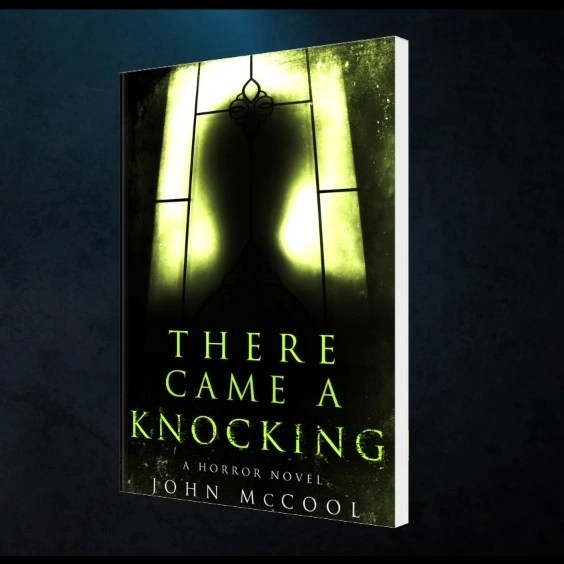
This is just a little update on my current work in progress. I have been writing “There Came A Knocking” every day since the beginning of January of this year. It’s been such an incredible experience, and I can’t wait to talk more about it in the near future! However, while being in such a sensitive phase in the novel writing process, it becomes a little hard to talk about it with so many story pieces being moved around the board.

I’m currently almost finished with my second draft of the novel which is a huge accomplishment. When I finished the first draft, I made one of the biggest mistakes an author can make after wrapping up that phase of the process. I immediately started working on the next draft as soon as I typed the final period on the sentence. For those of you who do not know, drafting your manuscript is nothing more than going over your work from top to bottom and editing. It’s to make sure you have a consistent story with no plot holes or continuity errors.

Most authors recommend taking a few weeks off after you finish your first draft to get rid of the book eyes, as it’s called, then hop into the second draft with the eyes as a self editor. So, I didn’t do that. I hopped in straight into the deep end of the pool which led to a wee bit of burn out. Rookie mistake, but we live and learn. The burn out didn’t last long, so as soon as I took a breather, I hopped back into it, and now I’m knocking on the door of a finished second draft.

My wife, of course, will be my alpha reader, but as soon as it’s ready to go I’ll begin the recruitment of my beta readers. After that, it’s go time for my editor, then my proofreader who I’ve yet to hire. Only then will I start to assemble a solid group of ARC readers to begin the long awaited day of November 10th! I’m very excited for this piece of literature I’ve worked so hard on, and I hope all of you enjoy the gripping, terrifying story as much as I enjoyed writing it.

Until next time!

John McCool

Categories
blog

Similar Story Devices In Anime and Wrestling

There’s a little exercise I like to do when I am consuming any type of fictional media. It’s very rare these days that I get a break long enough to enjoy other people’s work, but when I do, I like to analyze story elements within the writing. Now, this is just purely from a writer’s perspective, I could go all day about symbolic imagery film makers use in their work, but that’s a post for another time.

As I’ve gotten old, and further along in my writing career, I’ve noticed two similarities in the storytelling structure of two forms of fiction that are so dear to me growing up: Anime and Wrestling. Now, on paper these two are polar opposites. One is written for animators and voice actors to perform, while the other is a live action 360 degree theatre performance. Each has such unique ways of progressing a story technically, however I’ve started to identify similarities within the two from a story structure standpoint.

A common story note within the two are the use of factions to progress a story line with more than six characters. It’s simply the easiest way to involve multiple unique characters without having the need to necessarily build a deep lore for every single one of them. Notable examples are the Usos in WWE. They are an amazing faction, but them by themselves is less than spectacular. Jimmy Uso has no lore to him, Jey has a little bit, and Solo is nothing more than a modern retelling of the old Umaga character from the Ruthless Aggression era of the WWE. In anime there is no better example than the Z Fighters from Dragonball Z. The decision from the great Akira Toriyama to group the weaker members of his cast into a faction rather than having them forced alongside the main cast was a perfect example of how to use side characters. Characters such as Krillin, Tien, Yamcha, Goten, and Trunks just simply can’t carry the weight of the story as individuals, but as a team, they are perfect for expanding the overall chaos of the troubles the cast as a whole faces.

Now, this doesn’t mean that eventually a side character can’t be moved into a lead role. With Jey Uso in the WWE, he actually had a championship opportunity against the future leader of his faction, The Bloodline, before losing that, and eventually going on to join him. Even now as we start this season of WWE post Wrestlemania, we see Jey still a front figure in the Bloodline/Sami Zayne storyline. In Dragonball Z we see characters all the time get upgrades to their abilities which pushes them up the ranks of the cast. Piccolo is a recent example of a faction based side character making a big push for the spotlight in the newest movie, which I thought was an excellent idea, and a great use of such a foundational character to that franchise.

Another similarity between the two is the age old use of Hero versus Villain story structure. In Wrestling there’s actually technically terms used in the industry to identify the hero and villains of certain storylines. The hero is more commonly referred to as a “Baby Face” and the villain is referred to as a “heel”. Now, the heel term makes sense to me, but I never understood the baby face title, but I’ve never been in the Wrestling industry, so pardon my ignorance. The writing is usually pretty straight forward. The heel is doing some sort of injustice or has personally harmed the baby face kicking off the story line with their clear roles defined. The baby face is most of the time an underdog having to grind their way to the top in order to face off against the heel in an epic conclusion at the next major event show.

In anime, it’s quite clear story wise who the hero and villains are. Your hero is always going to be the main character of the show with the villain being introduced a little ways on. Like Wrestling, the hero will have to grind their way to the top in order to face their villain in an epic conclusion at the season’s end. The final confrontations are usually written as an event within the season to allow most plot points to be resolved for most characters to make way for new stories in the next season. These events are more subtly placed, because unlike Wrestling they don’t have flashy graphics displaying the name of said event with whoever is headlining it. However, if you analyze your favorite anime near the end of the season, it’s quite obvious where major resolution events begin. The most extreme example I can think of is Naruto Shippuden. The resolution arc starts as soon as the final battle of the Great Ninja War begins which ends up being like a 30 episode event.

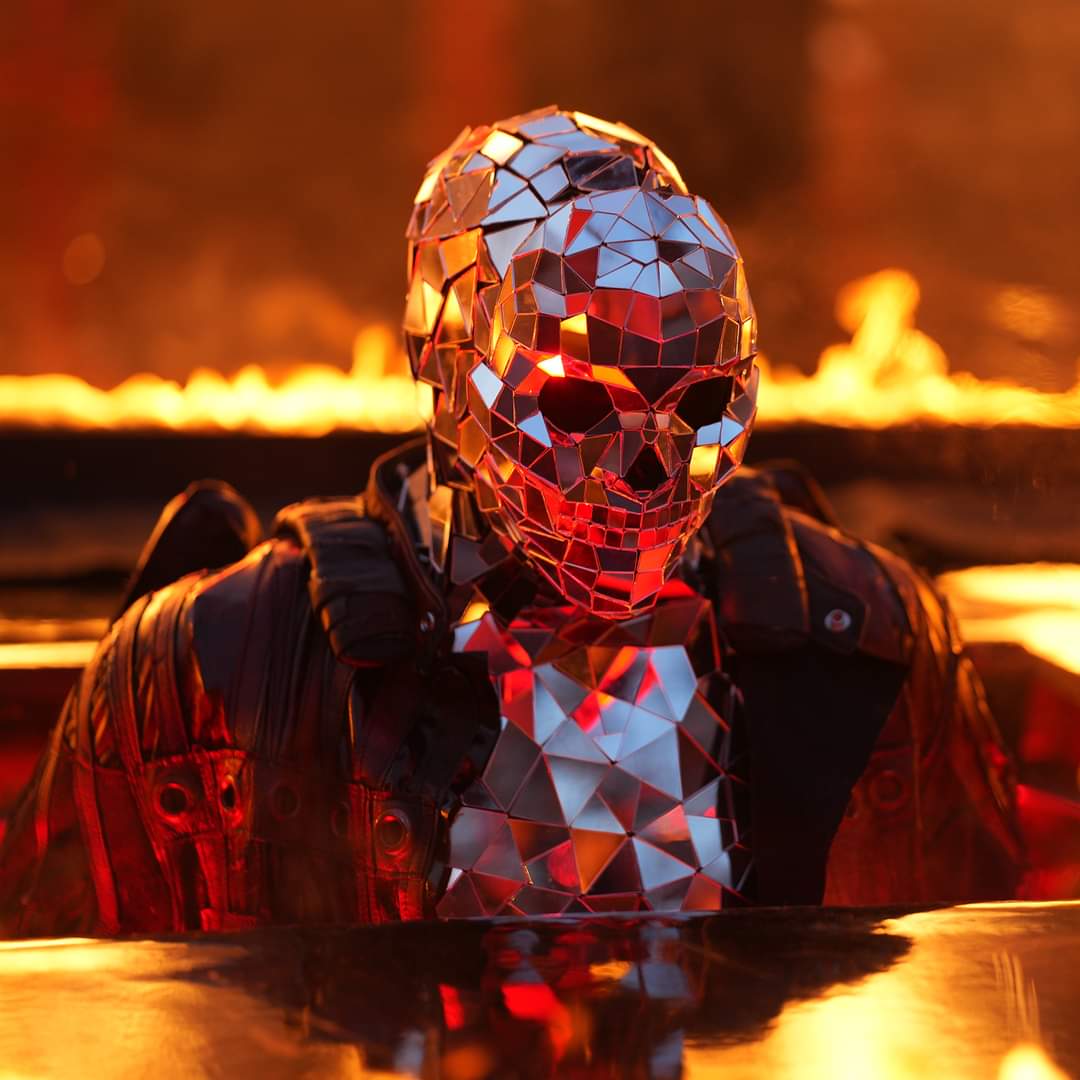
One of the last major crossovers, and honestly most fun in my opinion, is the use of character gimmicks. This is so fundamental to both forms of media that without it? They just simply wouldn’t be what they are today. The list is actually endless is you look at all the unique characters that have come and gone in both the wrestling ring, and the hundreds of anime shows out there. The use of gimmicks allows writers to bring an unrealistic flavor to a character in order to make them more memorable. For example, in WWE my favorite wrestler of all time, Edge, debuted in a faction called The Brood. Again, we see that use of faction building to introduce characters. The Brood was actually a faction that claimed to he vampires, and would enter the ring by rising from flames in an epic visual display of pyrotechnics. The leader of the faction would literally come out with a grail of liquid that looked like blood, and spit it in the air before entering the ring. It was truly epic, and made all three members of the faction stand out. This unique gimmick made two of those three skyrocket to superstar stature, and catapult their careers.

In anime, gimmicks can be placed as either physical or in terms of personality. In Zoids we are introduced to the series’ female lead who’s gimmick is she is a race of ancient people who have the ability to manipulate the robotic Zoid creatures that roam the lands. In My Hero Academia, our main character’s name is Deku which is actually a derogatory name given by the series’ anti-hero. The word Deku actually means “good for nothing” which follows the character’s upbringing as someone who has no super powers in a super powered world He actually accepts the name, and wears it as a badge of honor in this awesome twist on the gimmick. Not many people would adopt a potentially harmful name, so carrying that gimmick is such an awesome change for a main character.

For storytellers like me, it’s very interesting to identify story devices that appear in multiple fictional media. It’s a fun experiment that I would encourage any storyteller to try no matter what your preferred form is. Any of these lessons can be learned and applied to anything you write! While you’re enjoying your favorite TV show, try and pay attention to the actually writing of it, and see if you can compare it to a completely different form of media. You’ll be pleasantly surprised.

John McCool

Photo Credit: WWE
Categories
blog

Are Chapters Getting Shorter?

Has anyone noticed an interesting trend in literary fiction lately, or am I going crazy? On a routine supply run to a local chain grocery store for the coffee shops I manage, I usually take a few moments to browse the latest books. They have one of the better book sections compared to other chain department stores, so it always feels like a treat when I can take a looksie.

One of the greatest things to do when browsing books is, of course, flipping through the pages, and taking in the wonderful world the author has created. However, there seems to be a trend that I noticed a few months ago, and has persisted with every new release that I’ve flipped through

Are chapters getting shorter?

Now, hear me out. I am actually a fan of this structure for reasons I’ll get into later. I feel like it’s more manageable from a writing perspective, because instead of cramming so much information and progression within one single chapter, the author is able to keep the story moving at a more organized pace. I could argue that a lot of the times an author will use scene breaks to allow the reader to take a pause at the story’s progress, but in my opinion it feels so much more natural to end the chapter, and start a new one at a new scene. Don’t take that as I’m and anti scene break author, because I’m not. I use scene breaks all the time, I just feel in a contemporary sense that starting a new chapter is far more efficient.

So, what do I mean by being more efficient? In the outlining phase of any story, the author does a few things to keep organized well before fingers start clacking away on the keyboard. Some authors make plot points, some make a flow map, some just keep sticky notes everywhere, and some make a description for every single chapter. I am the latter. With this in mind, my chapters are already broken down into scenes. The exception being a change in perspective within the scene which I do several times in my current work in progress. The same events are happening within said scene, but the point of view switches to a different character.

I’m privileged to have the mind of a writer, so as I flip through the pages of new releases, I’m quite confident I know the reason why. I’ve had some of my fellow authors during discussions complain it is because the attention span of readers are shortening with the rise of Tiktok and other quick hit fiction. This is certainly true. However, it also makes the workflow of the author so much easier, so it’s a trend I’ve gladly accepted.

Compared to the fantasy novels of the 80s and 90s that hosted like 7,000+ word chapters, we are now seeing this trend take over modern fantasy authors churning out 1,500-3000 word chapters. This is completely fine and welcomed to not only the author in me, but the reader in me as well. I no longer have the time to sit on a late afternoon and consume an entire novella length chapter like I could in my younger years. Having these shorter chapters makes it easier to feel like, as a reader, you are making good progress, and are able to have multiple stopping points during your limited reading session. Nobody likes to stop reading in the middle of a chapter, so giving the reader the opportunity to frequently stop is perfect for the modern book world.

Next time you find yourself in the book aisle of your nearest department store, check out the chapter lengths of the newest releases, and you’ll see what I mean. Shorter chapters are a great trend that I hope hangs around for a long time.

– John McCool

Categories
blog

Writing With Limited Time

One thing that seems to turn off would be authors is a lack of time, or at least a perception that they have no time to write. This couldn’t be farther from the truth in my opinion. There is always time to write, but it’s up to the writer to find where that time is hidden.

Now, I understand that it gets difficult sometimes to carve out the time to put those stories on paper. Trust me, I get that. I have two young kids, work a full time job at a prominent coffee company in my area, and own my own house with the issue that comes with that. I find the time to write. It’s not a lot of time, but I do have it.

I have a very brief moment of peace in between the kid’s bed times, and headed off to the land of dreams myself. This is only about a 30 minute window, but the way I see it is that a little time to write is better than no time at all. With such a small time for daily writing, I’ve set a daily goal for myself that is achievable for this limited availability. I set out to write 500 words a day on my focused work which, in theory, will see me having a finished first draft in about three months. If I write 500 words minimum a day, that’s 3,500 words a week, and 15,000 a month. My target for the first draft is between 40,000-50,000 words, so as long as I keep to my commitment that manuscript will be done in no time. Of course, this doesn’t include multiple drafts and edits, but the point is to just knock out that first draft which is, in my opinion, the hardest part of the process. Beyond the act of sitting down at my laptop to write, I also have to find the time to do one of the most important tools in a writer’s utility belt.

Write an outline.

Outlining is the greatest tool I use, as well as what I recommend to most aspiring authors out there. I’ve found that keeping my outlining time and writing time separate. This ensures I can have continuous progress on my work in progress, as well as progress on the next project I have lined up. It’s actually kind of funny as I type this out, because my current project I’m also STILL writing the outline as I’m currently writing it. The outline goes a few chapters ahead of the actual work which keeps me on track, but my outlining time is spent on the same WIP I’m in the process of writing. Don’t reccomend this method…Finish that outline first.

Anyway, so separating your outlining time from your writing time will ensure progress is being made on multiple fronts. For me, as most of you know, I manage a coffee company, so I have the luxury of a little bit of downtime during some more time consuming, and methodical tasks. My biggest task I do while outlining is making Cold Brew. For anyone in the coffee industry, you know it can be quite tedious just standing around waiting to pour over your next gallon of water on the grounds. Lucky, I use and awesome app called Writer Plus. It’s a neat little app that allows me to keep all my chapter outlines organized, and various story notes together in It’s own folder. It’s pretty neat.

Life can be difficult sometimes. Trust me, I’ve been there. However, we are writers. We have to write. Making the excuse that you don’t have the time is just that. It’s an excuse. You can take the 15 minutes you would normally take to mindlessly scroll social media to write 100 words or maybe more! You just need to have faith that you can get this done, and tell that story that’s been consuming your thoughts for so long.

Tell the story!

– John McCool

Categories
blog

Book Announcement: The Ruse

I’m pleased to announce my new release: The Ruse!

So, what is this piece of fiction? The Ruse is actually a print version of my most successful screenplay to date in the festival circuit. It’s a coming of age tale about a lone girl in a post apocalyptic world that seeks to find a home for this first time in her life. When she does find that home, she’ll do whatever she must to protect it.

Readers will get and introduction from yours truly, the full festival screenplay, a analysis of why I wrote what I did, and am exclusive short story of what happens after the events. This print collection is a passion project of mine, and I can’t wait to share it with you.

The Ruse will be available March 31st on Amazon and Kindle!

Categories
blog

Wicked Ones Released!

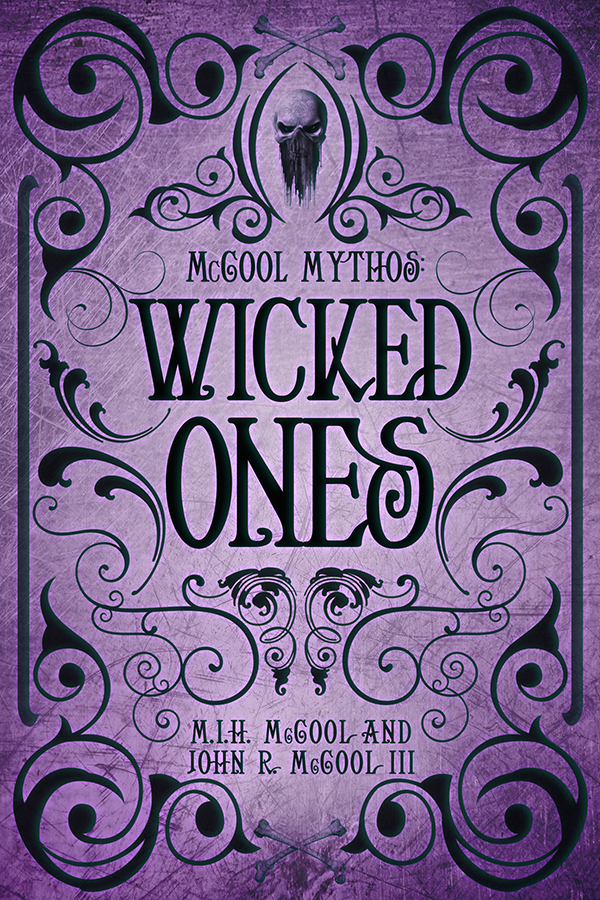
McCool Mythos: Wicked Ones is the next tome in the dark multi-verse of the McCool Mythos.

Wicked Ones is the result of a long year of labor and love. It was by far one of the toughest projects I’ve worked on. Me and my wife welcomed our son into the world, as well as purchased our first home. Two massive life altering things happening in the same year, and anyone who has been through either of those knows that they take a TON of mental energy. We did both in one year!

This tome follows two characters forever interwoven within the fabrics of the McCool Mythos. Balamos the Stag Lord weaves his web of deals and corruption through the ranks of mankind, and the story of Peter Anderson continues with insightful looks into his fabled story. The two’s story is just beginning in these epic tales.

These stories are such an awesome addition to the ever expanding multi-verse of the McCool Mythos, and I’m so glad we were able to complete it with so much craziness in our lives. There were a few bumps in the road with our formatter, but as we all know, life happens. It was an incredible journey, and I’m so excited to start putting pen to paper on the next one.

For all of those who have been with us on our writing journey, thank you so much. Your support means more to me than you’ll ever know. To those who are just joining, welcome! Pull up a chair, take a seat, and enjoy the incredible world’s we present to you on paper.

Welcome to the worlds of darkness and mystery.

Categories
blog

Life of an Indie Author

I was asked today on what it was like to be an indie author. I paused, unable to answer. However, now that I have time to reflect on it I believe I have an answer.

Being an indie author is TOUGH. Imagine being thrown out in the middle of the ocean, you don’t know how to swim, and nobody really cares that you’re drowning. That’s kind of like what being an indie author is like. Like crash landing in the Amazon with no provisions, no survival gear, and the rescue helicopter just keeps on flying by. Like being an astronaut landing on the moon, but your ship malfunctions leaving you stranded, and Houston bids you farewell and cuts radio contact.

Okay, I might be exaggerating a bit, but the world of indie authors can feel quite lonely. You put months and months of time into a literary project, and after it’s finished and you’ve created the perfect cover, you then have to go through the real horrors of the writing world.

Marketing.

Gosh, I shutter just thinking about it. Marketing is to authors like swimming is to mountain climbers. They simply don’t go together. However, it’s an issue that can be mitigated with vast amounts of time, and a little money thrown towards some marketers. Being an indie author is like being the captain of the ship, and the first mate, and the engineer, and the helmsman, and the navigator, and the radio operator, and the quartermaster, and the rest of the minor crew positions. You see what I spelling out to you, right?

Being an indie author isn’t just being a writer; it encompasses ALL aspects of the writing industry. You are the author, the editor, the cover designer, and the financer. However, on top of all that, you are your own worst critic which leads to many stories never being told in the first place. It’s super sad to think about, but the thought of indie publishing completely turns off would be authors that have some incredible stories to tell which is very unfortunate.

However, I tend take take another viewpoint on indie publishing. One a bit more optimistic. I see indie publishing as a team sport. As the team captain (AKA the writer), I have the responsibility to build a strategic team to help bring the story to life. Each position on the team I fills with a credible third party. Now does this cost money? Absolutely it does, but the way I see it is if you’re an author to make money then forget it. You have to do it for the art. The best payment I can recieve for my hard work is knowing my books are sitting upon the shelves of people’s home libraries. Just writing that give me chills. I’ve seen some gorgeous hoke libraries, and seeing my book within one of those wooden frames would be incredible.

Being an indie author is tough, but not unobtainable. You have to know your limitations, and understand that to have the best quality you HAVE to build a team on professionals for your project. Fullfil your dreams, and don’t let anything hold you back from telling those stories.

If I can do it, so can you.

Categories
blog

What makes horror so intriguing?


Horror is a genre that has been around for centuries, and it continues to be one of the most popular genres of entertainment. But what makes horror so interesting? Why do people flock to horror films, books, and video games?

One of the main reasons why horror is so interesting is because it allows us to explore our fears in a safe way. Horror films and books allow us to confront our fears in a fictional setting, and video games give us the opportunity to test our courage in a virtual world. Horror can also be used to explore deeper psychological issues, such as the fear of death or the unknown.

Another reason why horror is so popular is because it provides an adrenaline rush. Many horror films and books are designed to make us jump, scream, and feel a rush of excitement. This sense of adrenaline can be addictive, and it is one of the main draws of the horror genre.

Horror also can contain a sense of humor as well. Most lovers of horror come with a slightly darker sense of humor that can be explored a little more within the confines of the page and screen. One of my current works in progress is just such a thing. I’m not quite read to talk too much on it right now, but adding a sense of humor to traditional darker themes is a good way to brighten up stories that most of the time would turn away an audience.

Think of Scream. It’s one of my favorite slasher movies of all time. The writers chose to add a veil of humor over a story that’s actually quite tragic when analyzed. This made the film more approachable and attractive to new comers to the slasher genre that had been previously driven by gore. Now, not saying Scream doesn’t have its fair share of gore, but with the added humor, it diffused the senseless violence.

Finally, horror can be used to explore themes and ideas that are often difficult to discuss in other genres. Horror can be used to explore taboo subjects such as death, violence, and the supernatural. It can also be used to explore the darker side of humanity, such as greed, power, and revenge.

Horror is a genre that is both entertaining and thought-provoking. It allows us to explore our fears in a safe way, provides an adrenaline rush, and can be used to explore complex themes and ideas. It is no wonder why horror continues to be one of the most popular genres of entertainment.