Categories
blog

Starbound Ascension Lore: Money

The Universe of Starbound Ascension Lore

Money, money, money.

With the universe of Starbound Ascension in its publication infancy, I think it would be cool to showcase some of the lore touched on in the current novel and ones in the future as well. See, I’m a bit of a lore nerd. I remember a few years back staying up a full night studying the expansive and deep lore of Warhammer 40,000, and my God is that deep. That and the intoxicating lore of the Elder Scrolls just sent me down a deep rabbit hole that I simply couldn’t get enough of. The weird thing about lore in a sci-fi universe or a fantasy world is that it’s hidden under the surface most of the time. Unless you want, more times than not you’re never going to know. That’s what makes it so intriguing.

Perhaps it’s just with bigger franchises like the ones I previously mentioned, but for me I like to know the smallest details of the worlds I’m stepping into. Especially ones that I fall in love with. Starbound Ascension is only one novel deep at the time of this post, but goodness do I have lore written up enough to fill three to four. Any author or DM/GM of sci-fi and fantasy can relate. Building a complete world from the ground up is truly one of the best parts about the process, and for me, becomes a bit of an addiction.

Anyway, to kick off this lore we’re going to dive a bit into one of my favorite discussions. Economics! Nahh, I’m not going to bore you. We’re just going to talk about the main currency of the expansive Arkaan Empire: Astrids.

Astrids are paper notes with holographic designs printed on them detailing their stated worth. Each note is infused with trace amounts of asteroids with the specific compound mixture only found in the home Arkaan system. This currency system not only lessens the ability of creating forgeries, but maintains the value of each note by the limited resource of asteroids in the home Arkaan System. A simple, yet effective way to manage the economic flow of an inter-galactic civilization.

With a free market system such as one present in the Arkaan Empire, Astrids exchange hands for endless amounts of reasons that mimic our own. Work salary, paying for dinner, even as gifts, everyone loves money- everyone loves Astrids. Having a solid currency for the exchange of goods and services is the foundation to any state throughout history, and even more so in the universe of Starbound Ascension. Acquiring wealth has pushed society to bigger and better for thousands of years, and that will forever remain true. With a proper moral compass and endless opportunity there’s always the ability for a rags to riches story within the Arkaan Empire.

Now, there’s other species and factions within the galaxy where our stories take place, but they haven’t made themselves known yet on paper. Each one has their own system of value and “currency” that pushes them like any other. Only future adventures within the Starbound Ascension universe will reveal that!

Be sure to subscribe to the Dark and Mysterious blog as well as follow along on Instagram for book giveaways and other cool stories!

John McCool

Categories
blog

How To Avoid Writer’s Block

There’s nothing worse than sitting down at your laptop after a long day at work expecting to write down all the great ideas that swirled in your head all day, and it happens. You just sit there staring at the screen. Your fingertips are on your keyboard, but there’s no movement. Your hands turn to stone as your eyes glaze over at the white digital paper illuminated on your screen. Trust me, I’ve been there. However, over my short author career (4 years as of this post), I’ve developed a system that keeps me on track and pushes my narrative forward.

It’s nothing too crazy, and is designed to accommodate my EXTREMELY busy life. With all the craziness and chaos that comes with it, there’s very little room in my day to get my writing done. But I’ve done it. I’ve published a book a year for the past 4 years, and I’ve maintained the same system throughout. It may seem small and simple, but I promise you if you stick to it, you will have your dream novel finished in no time at all. You just have to stay to it and maintain discipline. You ready?

500 words a day.

That’s it. That’s all it takes to be an author. You can get that story on paper with just 500 words a day. Now, I know what you’re thinking: John, that isn’t very much. This is the way I see it. 500 words a day – 3,500 a week – 14,000 a month – 56,000 in four months. That’s a manuscript. Every young author that reaches out to me on Instagram asking what their word target should be, I always tell them 50,000. By most standards, that is considered a novel. Now, I’m not saying that your final draft should be that amount, but having a short first draft manuscripts gives you time to build on your story during further drafts. Trust me, your 50k first draft with turn into an 80k-90k in no time. After that first draft is finished, it is far easier to sit down and expand on what you’ve already written instead of trying to craft something from thoughts alone.

Now, here’s the real key. As you’re going about your day at work or school, I want you to think about EXACTLY what you’re going to write before you write it. Imagine the scene over and over again like a never ending loop until the only way to make it stop is to put it on paper when you get home. This exercise allows you to do the hard part of writing before you even have an opportunity to develop the dreaded writer’s block. While I’m at work I will obsess over the minor details I want to include in the current scene I’m writing. This allows me to mentally get myself ready to fire away on that keyboard before I even walk into my house. More times than not, that 500 words turns into 1,000 easy. When you know what you’re writing before you do it, it’s like copying from one paper to the other. Just one is in your mind.

The hardest part of this process is maintaining strict discipline. No matter what, you have got to find a way to get your 500 words done. Laziness is infectious, and if you fall under its spell, it’s so damn hard to break out of it. You have to be strong and imagine the feeling of pressing that publish button on KDP and releasing that story into the wild like a caged animal returning to its home. Dedication, discipline, and self motivation are foundational principles for being a hobbyist indie author. We write because we love it, not for a tiny paycheck.

Discipline = Results.

If you would like to chat about this topic, send me a message! I would love to go over it with you!

John McCool

Categories
blog

New Year, New Writing

“Echoes From A Distant Star” was officially released a few weeks ago, and it’s been a long, crazy ride! It’s been one of my biggest projects to date, and the most expensive for that matter. A lot of people don’t really know this, but being an independent author comes with a lot of financial cost. In contrast to a signed authors to a publishing company, I have to fork over the entire cost out of my pocket to bring my work to life. This is mainly why I consider myself a hobbyist instead of a “professional” author.

Now, that may be a tad bit misleading. I do consider myself to have professional quality, but I’m not aiming to be a full time writer and make a living off of it. I write fiction because I absolutely LOVE it. I have thousands of stories swirling in my head every single day, fighting for the gift to be placed on paper to become a portal to the real world. However, that’s of course not a realistic thing. I have tons of obligations in my life, so I have to be very selective of the time I allow myself to write, and what I write with that limited time.

For those of you amazing readers who still don’t know me, I’m a busy dude. I manage one of the BEST coffee companies in central Illinois and I’m a Dad of two kids with one on the way. Nothing is more important to me than spending time with my kids, which is why I have such limited time to write, and honestly, I’m cool with that. I’m very proud of the books I’ve written to date, and I’m so excited to share what I have coming up next! It’s still cooking, so you’re gonna have to just wait…

This is a bit of a weird blog post, but things are going great for these little fiction worlds I’ve created, and so many more are coming soon.

Thank you to all you amazing readers that have come along on the ride so far! There’s so many more stories and worlds to share with you in time!

Check out my new novel “Echoes From a Distant Star” on Amazon or Kindle now! Also, don’t forget to leave me a review whether you loved it or hated it. Reviews are the driving forces behind ALL independent authors.

– John McCool

Categories
blog

Chapter Titles Archaic?

Hey Readers!

Been a while since I posted here on the Dark and Mysterious blog. Life has been super crazy for me raising two kids and running the BEST coffee company in the midwest. Anyway, I had a thought this morning during my early morning commute that’s been rattling away in my head all day.

Is there a need for chapter titles?

As I’m finishing post production of my next novel, Echoes From A Distant Star, my mind is starting to shift to the book design, specifically the table of contents. As every novel should have one, I was thinking about if adding chapter titles is a route I wanted to take, or is it even necessary for a modern fiction novel?

So, historically chapter titles were used for signposts in a way to signal important events, plot twists, and character development, but looking at it from a mystery novel sense, is there another purpose it could be used for? A thought I even had was trying to integrate the chapter titles into the narrative of the novel itself, creating an interesting immersion for a murder mystery of sorts set in space.

Every novel I’ve had the pleasure of reading by my fellow indie authors seems to shy away from using chapter titles. In fact, I don’t think I’ve even read a book with chapter titles that wasn’t written in the early-mid 2000’s. I’m wondering if somewhere along the way they became a bit archaic or deemed too insignificant to add much to the novel. I mean, your chapters are already organized numerically with page numbers to go along with them, so is it actually necessary to have each one titled?

I’m curious about what my fellow authors think on this subject.

John McCool

Categories
blog

Get “There Came A Knocking” FREE!

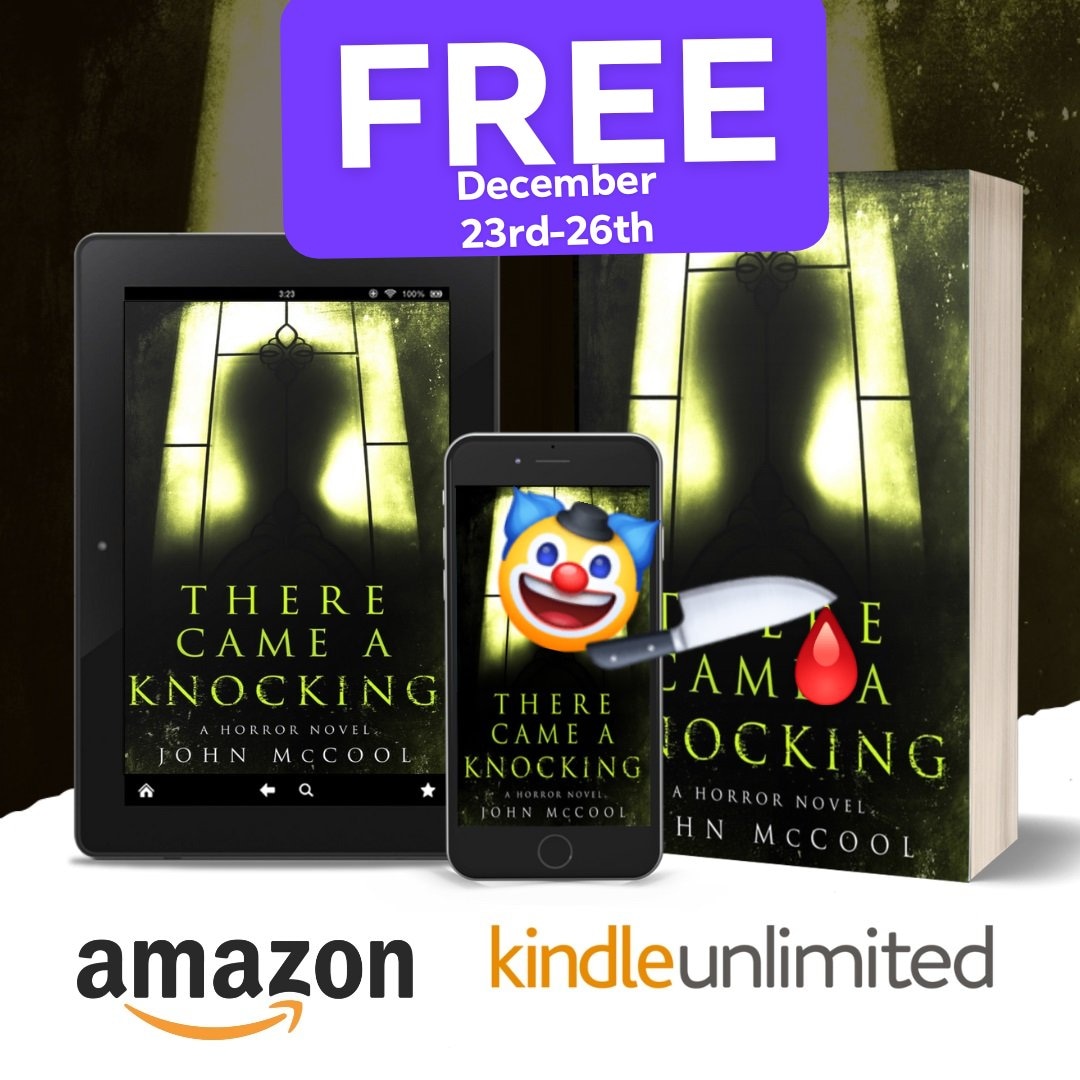
Merry Christmas everyone one! From now until December 26th my book There Came A Knocking is FREE on Kindle! Spook up your holiday with this 80s inspired slasher tale that will have you wondering if you actually remembered to lock your door at night.

Grab There Came A Knocking FREE now!

Synopsis: When Fear Knocks at Your Door, Will You Dare to Answer?

Best friends, Jessica and Danielle, are in for the fight of their lives as they fall victim to a home invader. However, this intruder isn’t there to rob them of the little they have. A simple game is all he’s after, and they have no choice but to play.
This horror/thriller calls back to the clown epidemic of 2016, where clown sightings became a regular occurrence for reasons that still remain a mystery.

Get ready to unlock a door to your worst nightmares. Get your copy of There Came A Knocking now and be among the first to experience the spine-tingling horror that will have you checking your locks twice.

Categories
blog

There Came A Knocking Publishes Tomorrow!

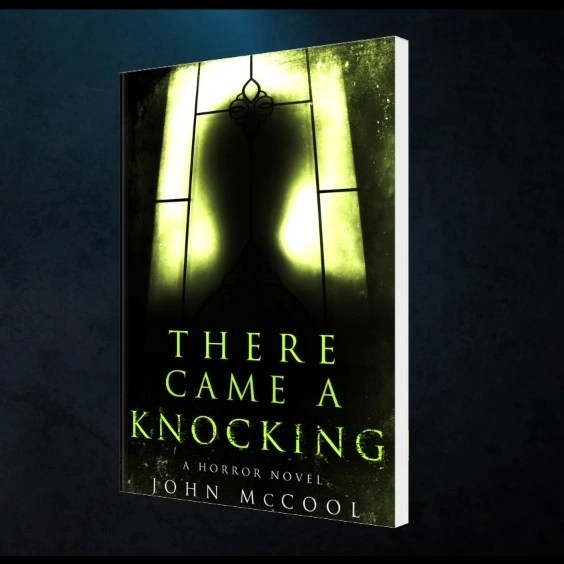
Tomorrow is publication day for my new novel “There Came A Knocking”!

I’m so excited to finally get this awesome work out to all of you incredible readers. I’ve put so much love into this, and painstakingly brought the retro feel of 1980’s slasher thrillers back to the literary world. The campy slasher genre has disappeared as of late leaving, what I would argue, a void that hasn’t been filled by much of anything substantial. My hope is that this novel can revive some peoples’ interest, and reignite the silliness that comes with it.

Now, what do I mean by silliness? It’s all about the gimmicks and the HORRIBLE decisions that our poor unsuspecting character make within the horrorscape that we as authors create. Think about some of the best slashers out there! The combination of an interesting gimmick and the complete absurdity of characters’ choices to go into the dark basement when you as the reader KNOW there’s something fishy going on down there. It’s almost satisfying to see a clearly dumb move be punished by something you’re mentally telling the character not to do. That’s party of the joy of the genre!

Think of some of your favorite movie slashers and really think of their gimmicks. Ghostface has the ghost mask and hunting knife, Jason has the hockey mask and giant machete, Freddy Krueger has the burned body with the finger blades, and Jeepers Creepers has his hate and coat to cover his demon body. The gimmicks are the key to creating a memorable antagonist in these stories, and it’s something I find so much fun in creating. The best part is coming up with something so absurd, give it to someone with murderous intent, and let them loose into the worlds of the page.

In some ways one could compare the slasher horror/thriller genre to that of romantic comedies. The stories are so full of absurdly exaggerated events that lead the characters to make choices that one would never do in real life. Do you think the hot cowboy billionaire is gonna choose the city girl that has nothing much to give him? Yeah, probably not. Do you think that rummaging around in a dark creepy shed behind your house while you’re being stalked by a serial killer is going to result in anything except you being stabbed? Yeah, you get my point.

This genre is so dear to me, and offers so many great stories that keep you looking over you shoulder as you walk through your house at night. did you check if your door is locked? Better go double check, who knows who could out there. “There Came A Knocking” has a slasher with a killer gimmick that would make you question if his motives blur the lines between what is morally right or wrong. Or maybe you will just see him as a monster that he is to so many unfortunate people. That conclusion is completely up to you! I look forward to hearing what all of you amazing readers have to share about it in the coming weeks post publication.

Thank you all so much for coming on this journey with me, and I look forward to all of you coming a knocking with me!

John McCool

Categories
blog

Minneapolis’s Hidden Bookstore

Recently I undertook a journey to the land of a thousand lakes for a work trip to Cafe Imports and Mill City Roaster. Oh yes, I’m talking about the land of the Vikings in America. The lands of the far north that borders our friends and partners across the great lakes. I’m talking about the great state of Minnesota, land of a thousand lakes.

After my business things were taken care of, I decided to just strap on my backpack, pick a direction and just walk. I walked on for a while until I happened across this super cool book store hidden off the beaten path. Every time I go off adventuring in some new city, I make it a point to find a local coffee shop, and find a nice used bookstore to lose myself in for a few hours. So business trip or not, this trip was no different.

I stumbled upon a very interesting sign that just leaned up against the side of the building. It literally said “Books, Maps, and Prints”. What a way to pique my interest, right? I was immediately intrigued. I promptly crossed the street, and pushed my way into the old wooden door revealing the hall within. Now, what was really cool about this building was that it was actually connected to an art studio, which had their current exhibit up on full display as soon as you stepped in.

Their theme was a very relevant subject that we see quite frequently in the circles of the literary world. The theme was Banned Books. Displayed all through the exhibit was various forms of artistic representation of books being banned through society, whether for a good reason or bad, the intention was clear. However, the most impressive piece was four books that hung from the ceilings by chains. The dangled loosely to about chest level where upon further inspection, I discovered that there was a little lock mechanism that allowed someone to open them up and read the books. This was such a super cool feature, but it was the actual books themselves that interested me more. From the chains hung religious texts from four of the biggest religions in the world. It was fascinating to try and dive deep into the mind of the artist to understand what they were going for. Why were they hung from the ceilings by chains? Why were they locked, but easily unlocked for anyone to read? It was simply an incredible exhibit.


After that awesome surprise, I took a trip next door to the reason why I came. Before me was a low lit, dusty, old book store with books piled high to the ceiling. Literally my dream come true. This little hole in the wall is a small operation ran by an older man, that was just as awkward as you could imagine. He was the owner of this fine establishment, and wore the wrinkled face of a man who had seen a thing or two in his day. Each wall was lined with books from medieval reprints to maps of some of the strangest places in the world that one might not expect to find in such a place. It was quite the collection that could only be spawned in the dreams of a bibliophile.

I took my time to rummage through the seemingly endless shelves; most so over stocked that there were stacks piled up high on the floor. What I discovered is this book store was dedicated to the realms of knowledge and history. 85% of the tomes that lined those shelves held the chronicles of the world which the likes I’ve never seen. Memoirs, biographies, history texts, language books, How-to’s- and even a few cook books thrown in for good measure. I love the fact that places like this exist to preserve some of the forgotten lore from our history. In an age where reading certain things can be looked down upon, seeing this old man hold such tomes was a delight.

One section that quite interested me the most was his vast collection of art books. Each one was carefully categorized by the region which the art pieces were collected, making the seemingly endless books more manageable. The shelf that interested me the most was the Japanese art collection. I’m very interested in this subject at the moment as I am currently wrapping up a course in Japanese Scrolls and Manuscripts at Harvard University online. As I flipped through the pages, I found many of the works which I had learned about in my studies which gave me valuable insight.

Now, I don’t really collect non-fiction books, however, I can truly appreciate it. Even though there weren’t any books I walked out with, the memory of this place will forever be with me. If you ever find yourself in Minneapolis, MN, please go check out this incredible shop. Finding this little book store confirmed to me that the used book market isn’t going away any time soon.

John McCool

Categories
blog

Current Novel WIP Update

Hey Reader!

This is just a little update on my current work in progress. I have been writing “There Came A Knocking” every day since the beginning of January of this year. It’s been such an incredible experience, and I can’t wait to talk more about it in the near future! However, while being in such a sensitive phase in the novel writing process, it becomes a little hard to talk about it with so many story pieces being moved around the board.

I’m currently almost finished with my second draft of the novel which is a huge accomplishment. When I finished the first draft, I made one of the biggest mistakes an author can make after wrapping up that phase of the process. I immediately started working on the next draft as soon as I typed the final period on the sentence. For those of you who do not know, drafting your manuscript is nothing more than going over your work from top to bottom and editing. It’s to make sure you have a consistent story with no plot holes or continuity errors.

Most authors recommend taking a few weeks off after you finish your first draft to get rid of the book eyes, as it’s called, then hop into the second draft with the eyes as a self editor. So, I didn’t do that. I hopped in straight into the deep end of the pool which led to a wee bit of burn out. Rookie mistake, but we live and learn. The burn out didn’t last long, so as soon as I took a breather, I hopped back into it, and now I’m knocking on the door of a finished second draft.

My wife, of course, will be my alpha reader, but as soon as it’s ready to go I’ll begin the recruitment of my beta readers. After that, it’s go time for my editor, then my proofreader who I’ve yet to hire. Only then will I start to assemble a solid group of ARC readers to begin the long awaited day of November 10th! I’m very excited for this piece of literature I’ve worked so hard on, and I hope all of you enjoy the gripping, terrifying story as much as I enjoyed writing it.

Until next time!

John McCool

Categories
blog

Similar Story Devices In Anime and Wrestling

There’s a little exercise I like to do when I am consuming any type of fictional media. It’s very rare these days that I get a break long enough to enjoy other people’s work, but when I do, I like to analyze story elements within the writing. Now, this is just purely from a writer’s perspective, I could go all day about symbolic imagery film makers use in their work, but that’s a post for another time.

As I’ve gotten old, and further along in my writing career, I’ve noticed two similarities in the storytelling structure of two forms of fiction that are so dear to me growing up: Anime and Wrestling. Now, on paper these two are polar opposites. One is written for animators and voice actors to perform, while the other is a live action 360 degree theatre performance. Each has such unique ways of progressing a story technically, however I’ve started to identify similarities within the two from a story structure standpoint.

A common story note within the two are the use of factions to progress a story line with more than six characters. It’s simply the easiest way to involve multiple unique characters without having the need to necessarily build a deep lore for every single one of them. Notable examples are the Usos in WWE. They are an amazing faction, but them by themselves is less than spectacular. Jimmy Uso has no lore to him, Jey has a little bit, and Solo is nothing more than a modern retelling of the old Umaga character from the Ruthless Aggression era of the WWE. In anime there is no better example than the Z Fighters from Dragonball Z. The decision from the great Akira Toriyama to group the weaker members of his cast into a faction rather than having them forced alongside the main cast was a perfect example of how to use side characters. Characters such as Krillin, Tien, Yamcha, Goten, and Trunks just simply can’t carry the weight of the story as individuals, but as a team, they are perfect for expanding the overall chaos of the troubles the cast as a whole faces.

Now, this doesn’t mean that eventually a side character can’t be moved into a lead role. With Jey Uso in the WWE, he actually had a championship opportunity against the future leader of his faction, The Bloodline, before losing that, and eventually going on to join him. Even now as we start this season of WWE post Wrestlemania, we see Jey still a front figure in the Bloodline/Sami Zayne storyline. In Dragonball Z we see characters all the time get upgrades to their abilities which pushes them up the ranks of the cast. Piccolo is a recent example of a faction based side character making a big push for the spotlight in the newest movie, which I thought was an excellent idea, and a great use of such a foundational character to that franchise.

Another similarity between the two is the age old use of Hero versus Villain story structure. In Wrestling there’s actually technically terms used in the industry to identify the hero and villains of certain storylines. The hero is more commonly referred to as a “Baby Face” and the villain is referred to as a “heel”. Now, the heel term makes sense to me, but I never understood the baby face title, but I’ve never been in the Wrestling industry, so pardon my ignorance. The writing is usually pretty straight forward. The heel is doing some sort of injustice or has personally harmed the baby face kicking off the story line with their clear roles defined. The baby face is most of the time an underdog having to grind their way to the top in order to face off against the heel in an epic conclusion at the next major event show.

In anime, it’s quite clear story wise who the hero and villains are. Your hero is always going to be the main character of the show with the villain being introduced a little ways on. Like Wrestling, the hero will have to grind their way to the top in order to face their villain in an epic conclusion at the season’s end. The final confrontations are usually written as an event within the season to allow most plot points to be resolved for most characters to make way for new stories in the next season. These events are more subtly placed, because unlike Wrestling they don’t have flashy graphics displaying the name of said event with whoever is headlining it. However, if you analyze your favorite anime near the end of the season, it’s quite obvious where major resolution events begin. The most extreme example I can think of is Naruto Shippuden. The resolution arc starts as soon as the final battle of the Great Ninja War begins which ends up being like a 30 episode event.

One of the last major crossovers, and honestly most fun in my opinion, is the use of character gimmicks. This is so fundamental to both forms of media that without it? They just simply wouldn’t be what they are today. The list is actually endless is you look at all the unique characters that have come and gone in both the wrestling ring, and the hundreds of anime shows out there. The use of gimmicks allows writers to bring an unrealistic flavor to a character in order to make them more memorable. For example, in WWE my favorite wrestler of all time, Edge, debuted in a faction called The Brood. Again, we see that use of faction building to introduce characters. The Brood was actually a faction that claimed to he vampires, and would enter the ring by rising from flames in an epic visual display of pyrotechnics. The leader of the faction would literally come out with a grail of liquid that looked like blood, and spit it in the air before entering the ring. It was truly epic, and made all three members of the faction stand out. This unique gimmick made two of those three skyrocket to superstar stature, and catapult their careers.

In anime, gimmicks can be placed as either physical or in terms of personality. In Zoids we are introduced to the series’ female lead who’s gimmick is she is a race of ancient people who have the ability to manipulate the robotic Zoid creatures that roam the lands. In My Hero Academia, our main character’s name is Deku which is actually a derogatory name given by the series’ anti-hero. The word Deku actually means “good for nothing” which follows the character’s upbringing as someone who has no super powers in a super powered world He actually accepts the name, and wears it as a badge of honor in this awesome twist on the gimmick. Not many people would adopt a potentially harmful name, so carrying that gimmick is such an awesome change for a main character.

For storytellers like me, it’s very interesting to identify story devices that appear in multiple fictional media. It’s a fun experiment that I would encourage any storyteller to try no matter what your preferred form is. Any of these lessons can be learned and applied to anything you write! While you’re enjoying your favorite TV show, try and pay attention to the actually writing of it, and see if you can compare it to a completely different form of media. You’ll be pleasantly surprised.

John McCool

Photo Credit: WWE

Categories
blog

Are Chapters Getting Shorter?

Has anyone noticed an interesting trend in literary fiction lately, or am I going crazy? On a routine supply run to a local chain grocery store for the coffee shops I manage, I usually take a few moments to browse the latest books. They have one of the better book sections compared to other chain department stores, so it always feels like a treat when I can take a looksie.

One of the greatest things to do when browsing books is, of course, flipping through the pages, and taking in the wonderful world the author has created. However, there seems to be a trend that I noticed a few months ago, and has persisted with every new release that I’ve flipped through

Are chapters getting shorter?

Now, hear me out. I am actually a fan of this structure for reasons I’ll get into later. I feel like it’s more manageable from a writing perspective, because instead of cramming so much information and progression within one single chapter, the author is able to keep the story moving at a more organized pace. I could argue that a lot of the times an author will use scene breaks to allow the reader to take a pause at the story’s progress, but in my opinion it feels so much more natural to end the chapter, and start a new one at a new scene. Don’t take that as I’m and anti scene break author, because I’m not. I use scene breaks all the time, I just feel in a contemporary sense that starting a new chapter is far more efficient.

So, what do I mean by being more efficient? In the outlining phase of any story, the author does a few things to keep organized well before fingers start clacking away on the keyboard. Some authors make plot points, some make a flow map, some just keep sticky notes everywhere, and some make a description for every single chapter. I am the latter. With this in mind, my chapters are already broken down into scenes. The exception being a change in perspective within the scene which I do several times in my current work in progress. The same events are happening within said scene, but the point of view switches to a different character.

I’m privileged to have the mind of a writer, so as I flip through the pages of new releases, I’m quite confident I know the reason why. I’ve had some of my fellow authors during discussions complain it is because the attention span of readers are shortening with the rise of Tiktok and other quick hit fiction. This is certainly true. However, it also makes the workflow of the author so much easier, so it’s a trend I’ve gladly accepted.

Compared to the fantasy novels of the 80s and 90s that hosted like 7,000+ word chapters, we are now seeing this trend take over modern fantasy authors churning out 1,500-3000 word chapters. This is completely fine and welcomed to not only the author in me, but the reader in me as well. I no longer have the time to sit on a late afternoon and consume an entire novella length chapter like I could in my younger years. Having these shorter chapters makes it easier to feel like, as a reader, you are making good progress, and are able to have multiple stopping points during your limited reading session. Nobody likes to stop reading in the middle of a chapter, so giving the reader the opportunity to frequently stop is perfect for the modern book world.

Next time you find yourself in the book aisle of your nearest department store, check out the chapter lengths of the newest releases, and you’ll see what I mean. Shorter chapters are a great trend that I hope hangs around for a long time.

– John McCool